
The Olive Writers Summer Camp 2023
We are very happy to announce the fifth edition of The Olive Writers Summer Camp, organized in partnership with Friedrich Naumann Foundation for Freedom, the American Arts Center Casablanca, and the D66 International.
The Summer Camp brings young writers from across Morocco and abroad together to spend a week at an intensive writing residency in Casablanca free of charge. Participants will attend daily creative writing workshops (offered in Arabic or English), attend lectures by renowned writers and intellectuals, develop their soft skills and learn about civic engagement and the publishing industry, revise and refine a creative project of their own, and become part of a dynamic community of fellow writers.
2023 Theme: Life in the Temporary: Journeys of the Heart
The theme explores the complex relationship that young people have with their home country and the thought of leaving to pursue a better life elsewhere. Many young people view migration as a means of achieving their dreams of opportunity, adventure, and freedom from the constraints of their present situation. But when people decide to move away, they frequently experience regret, guilt, yearning, and a sensation of being cut off from their roots.
The goal is to delve deeply into the meanings of certain words, such as; stability, tranquility, place, belonging, home, migration, displacement, transition, and waiting, generating wide-ranging conversations through a program that brings together writers and intellectuals. How can someone belong to a community, yet remain attached somewhere else? Is home a place, or a feeling?
Young writers have the chance to explore their own sentiments and experiences surrounding migration, as well as those of their peers and to reflect on the effects of this phenomena on their communities and society at large, via the lens of this theme.
When and where will the program take place?
The program will take place from July 14th through July 20th, at the American Arts Center in Casablanca.
Who can apply:
- Passionate writers who are interested in developing their creative writing skills.
- Moroccan writers between the ages of 18-26, based in Morocco or Abroad.
- You must be able to participate in the full week program.
- International students in Morocco are eligible to apply.
How can I apply?
Complete the application form, based on your writing language preference, available in Arabic and English. Please prepare the following materials, as you will be requested to attach them to your application:
- Writing sample — 1 page (500 words maximum) of original creative prose and/or poetry, written in either Arabic or English
- Writing assignment — 1-2 pages (1000 words maximum) personal essay in response to the following writing prompt:
Have you ever thought about leaving your home country for a better life abroad? If so, what motivated this desire, and what do you hope to achieve by relocating? If you’ve chosen to stay, what factors influenced your decision? Are there specific reasons, such as family, social ties, or cultural roots, why you don’t want to leave? How are these decisions affecting your life?
On the other hand, if you were born into an immigrant family or had to relocate when your family did, we would like to hear your experiences and perspectives on navigating multiple cultural identities. What are the benefits of growing up between cultures, and how has this influenced your outlook on life? Do you feel a sense of belonging to both cultures, or do you feel like you must choose one over the other? What are the challenges you’ve faced in finding your place in both cultures, and how have you overcome them (if you did)?
- Statement of purpose — In less than 200 words, describe in English or in Arabic why creative writing is important in your life. Please also discuss the difficulties or challenges you have faced in your writing, as well as what you hope to learn at the program.
- A photo of yourself.
- Optional — One Letter of Recommendation.
Application Guidelines:
- You must fill out the application form (below) in the language of your writing materials.
- All application materials must be received no later than May 26th, 2023 (midnight) GMT+1.
- If you write in another language in addition to English or Arabic, feel free to share a link in the form.
- Plagiarism will not be tolerated. All submissions will be automatically screened for plagiarism. Applications that are found to contain any plagiarized material will be disqualified without notification to the applicant. If you are unsure what constitutes plagiarism, please contact us at information@olivewriters.org
- If you don’t meet the criteria for this program (due to the age restriction or your country of residence, for example), please fill out the form here explaining your situation. We will do our best to accommodate you for this or future programming.
- This is a fully-funded opportunity: Thanks to the financial contributions of project partners, tuition, room, and board are provided free of charge to all accepted participants. Flights for international participants will be covered on a need-basis, depending on availability of funds.
Application link in English: click here
Note: If you face any difficulty in filling out the application, or uploading the materials, don’t hesitate to reach out to one of the following emails below (according to the language of your submission):
Arabic: mohannad@olivewriters.org
English: seddik@olivewriters.org
For more information or questions, please contact:
TOW Facebook page: https://web.facebook.com/OliveWriters
TOW Instagram: https://www.instagram.com/theolivewriters/
TOW team: information@olivewriters.org

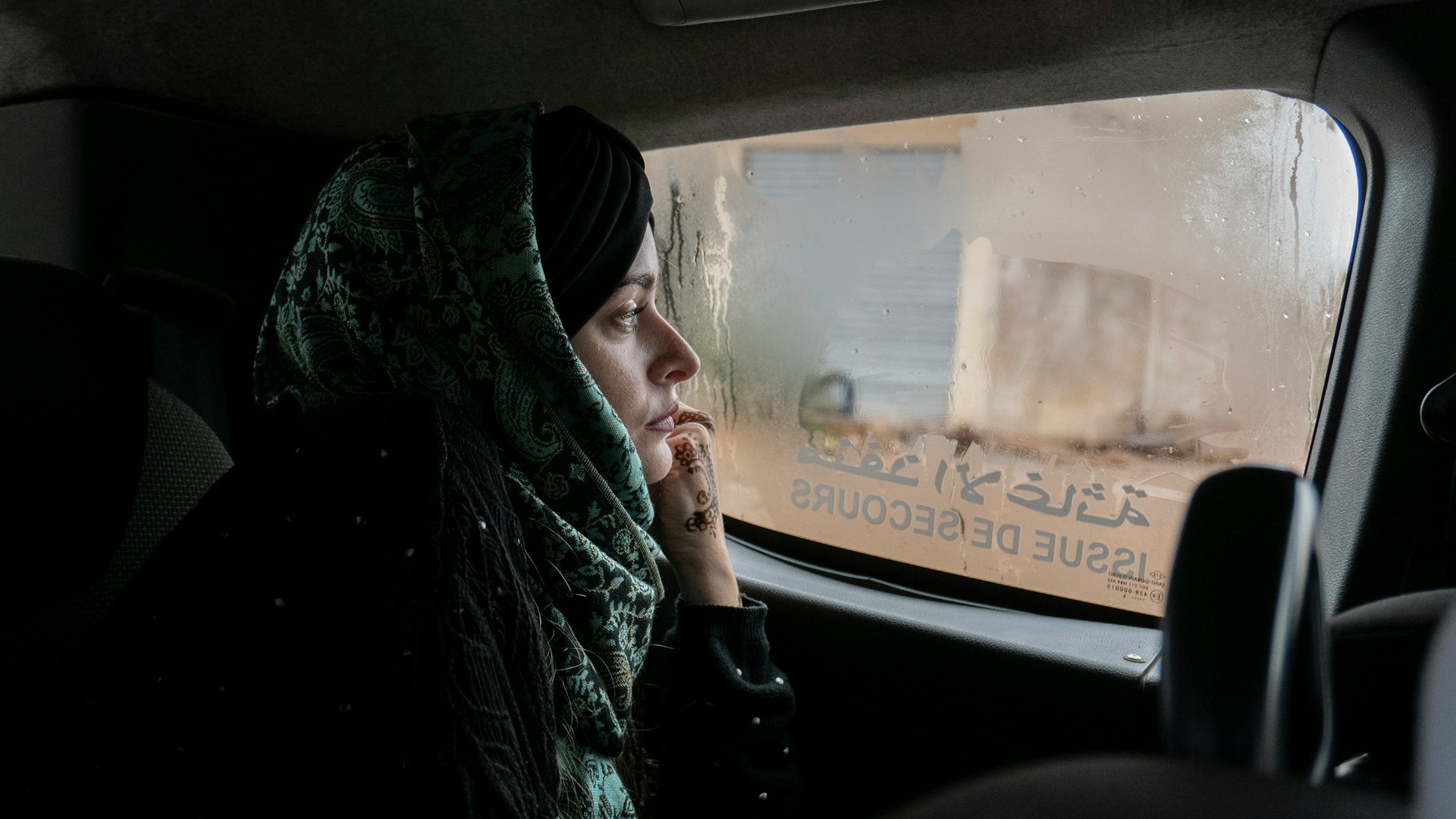
Al-Farasha, Unnamed
The station is fussy. People are coming, going, embracing, crying, and looking at their tickets repeatedly. Yet, the people in the station of Boujloud are not the same and are definitely not equal. There are two kinds of people in the station: “Wlad Lmahata,” or the sons of the station, and the travelers. The travelers’ pockets and wallets are hunted down because for Wlad Lmahata to fight over a dirham is nothing new. These fights are daily, and, at times, they can also be bloody. The veins in their forehead strain against their skulls as their eyes bulge at the sight of dirhams. Some continue to rub their hands against each other, appealing to the heavens for good fortune. However, they look like flies attempting to clean their filth while living in filth; they fail forever. If a son gets a fat tip, he rewards himself with a pack of Marlboro cigarettes and a pack of Flash chewing gum. Sometimes, they call for a ragged, exhausted hollow cup of mint tea. This holy trinity is invoked once a day, for it is a luxury. As the lips slightly caress the hips of the cigarette, the tea overwhelms the smoke with fluid hugs. The tongue becomes an oriental dancer amidst the sexual tension between tea, smoke, lips, and cigarettes. The cigarette burns itself, for it knows it has sinned until it is thrown under cold, emotionless boots. The Flash chewing gum cleanses the traces of sin, the remnants of unending sexual intercourse. As soon as the Flash chewing gum is spat, the eyes bulge, the veins tense, the sweat awakens, and poverty looms.
The sons do not call each other by their real names. It is near disgrace if one does so. This unwritten and unspoken law is unknown to outsiders. They all have nicknames that refer to their body shapes, past inconveniences, mispronounced words, etc. The moniker might be disrespectful, but it is a badge of honor since only the sons can have it. The rite of passage to manhood in the station depends on bestowing a name on the unnamed. Yet, one has to undergo a trial of trickery, wiliness, and slyness. The unnamed has to hustle 20 dirhams from a single traveler through lies, deceit, or theft. The means matter not; the end does. The unnamed fingers hiss, awaiting the right moment to strike a pocket or a wallet. The Index acts as a side-kick to the middle finger, the anaconda, as it strikes a clueless pocket. Even when the hunting fingers are seen, the other fingers speak not; instead, they grin at each other. The traveler can only be bitten; if they scream, “A THIEF!” the other fingers shall become fists to seal the screaming mouth. None shall interfere in the trials. If the unnamed pass this trial, a name is bestowed upon him.
“Sninat” is a tall and slender son of the station. He is nicknamed Sninat, or teeth because he does not have them. His trial was pretty easy because of his long and slippery fingers; he got his 20 dirhams on the first try from a bourgeois merchant. He wore his usual worn-off FC Barcelona t-shirt without a number on the back, while his no-longer-black jeans had a small imperishable patch on the left side of his ass. Sninat lurked with a cigarette in his hand. Then, his eyes surveyed the field before him, awaiting a lost traveler. When his eyes detected his prey, he jogged towards a fat, soft, and clear-skinned traveler and said the line that all the sons say, “To which city are you going, brother?” You could sense the jealous stares of the other sons on Sninat’s back, shredding the already exhausted t-shirt. Whether the traveler answered did not matter, Sninat smiled and pulled the luggage off the traveler’s hands ‘to help.’ Then he walked with him. The Grand bus Al-Farasha, or the butterfly, in which the traveler was leaving for Tangiers, was ready to depart. Sninat pointed at it, and the traveler nodded.
Upon reaching Al-Farasha, the traveler gave Sninat a wicked smile, put his hand in his pockets, pulled out some change, picked 2 dirhams, and handed it over. Sninat felt insulted and glared at the traveler, then shouted, “Add 5 dirhams at least!” Suddenly, the traveler felt the chill of the gazes around him. The gazes of jealousy shifted to the traveler and became of hatred. The cold sweat on the fat traveler’s forehead and red cheeks made him look an easy prey. The traveler put his hand in his pockets, pulled 10 dirhams, and extended his hand. Sninat took it violently from him and said, “You should have led with this, my brother!” He returned triumphantly to his favorite corner in the station beside “Mol Detai,” the cigarette seller, and “Mol Zariaa,” the sunflower seeds seller. He bought two Marlboro cigarettes, two Flash chewing gum, and a cup of mint tea before sitting in his corner, silent and alone. As he inhaled and exhaled the cigarette’s smoke, he thought about his wife and son as he often does. He still lives with them in a 10×8-meter room which functions as a living room, a bathroom, a kitchen, and a bedroom. He pays 450 dirhams for this tiny darkroom. No one attended their wedding except for their parents and close relatives. They played a few Chaabi songs on an exhausted MP3 player while no one danced. It ended fast, he thought. His wedding day should have taken the whole night. He had wanted a DJ to make the entire neighborhood insomnolent. He knew he could not afford these things but always dreamed about what could have been.
Each day in the same corner, the first cigarette ends while its smoke becomes dense. He lights the second cigarette while gazing if any new traveler appears. No one does. He returns to his imagination and recollections. Sninat remembers how his wife had made his life easier when they had just gotten married. She would wear cheap panties and light robes for him. Although she had only one breast, he was happy with her body. He saw her as the materialization of beauty. When she got pregnant, she became shrewish and, at times, too demanding; she denied him sex. Sninat thought it was all due to pregnancy, yet it was not. After his son was born, she started nagging him for sugar, food, diapers, and much more. He could not afford everything. “She dismissed me for six years from her body, yet she still demands money!” he thought and slightly grinned. He fought over 5 dirhams regularly just to have something to give to his wife at the end of the day. She became everything he did not want her to be. His son, Yahya, should be in elementary school this year. Sninat remembers how he pretended to have forgotten the deadline for students’ inscription just to save money for rent. He lied, but it was for everyone’s sake. He often tells Mol Detai, “If it were not for these cigarettes, I would have killed myself!” Mol Detai responds with a smile as if he already knows, as though every son of the station is the same. He is always afraid of ending his second cigarette, but alas, the second cigarette ends. The dense smoke in his chest hides a heavier celestial presence.
One day, per usual, Sninat noticed a traveler in the station. She was walking nonchalantly while talking about her undergraduate research on the phone in English; she was arguing for the reduced poverty rates in Morocco while the voice from the phone was arguing that alienation is a Moroccan myth. Sninat’s eyes bulged as he walked silently toward her. Sninat and another son stood beside the traveler simultaneously; both asked her almost simultaneously, “To which city are you going, sister?” She said Rabat. Both walked with her. Sninat carried her luggage while the other chatted with her as he was chewing a Flash chewing gum fast and hard. When the traveler arrived at the Grand bus, she gave the other son 10 dirhams. She entered the bus, still talking about her dumb supervisor, who did not see the genius in her. The voice agrees, and both of them giggle. Meanwhile, in a dark corner next to Mol Detai, Sninat was furious and demanded 5 dirhams. The other son, Lhafi, made it clear that he did not want to share. They fought over 10 dirhams. Sninat was winning the fight until his adversary pulled a kitchen knife. Lhafi knifed Sninat. As Sninat was dying slowly, he thought of his wife, his son, his dream of owning a house, the station, and even having sex. He realized he was not the station’s son but a living dead, a son of poverty. Poverty loves its children to death. Sninat died for 10 dirhams. 6 hours after his death, an ambulance “unintentionally” arrived late. Lhafi ran. He, again, became unnamed. Al-Farasha departs.
Rachid Benharrousse
Running out of Age
I’m a thief I confess;
Stealing youth out of-
Cigarettes I bring to life,
And suffocate with my lips.
But I take no pleasure-
In my dreadful doing,
Death is chasing my soul,
Like a bounty hunter.
It gets closer with every breath-
Wasted on time,
And each poem composed-
Free of rhyme.
I run faster than age:
Thinking I should overpass it,
I sleep less than dreams:
Believing they would pass out.
Yet still I am afraid it is due,
The lives I have taken-
Are not that few;
The first was just a child,
Lost and confused in his being.
The second wasn’t old enough,
To understand what he was seeing.
The third was forced to grow,
When he himself needed freeing.
Then came the fourth, the fifth-
And many followed,
Every time an identity dies-
Another is borrowed,
But once he learned to love-
His heart was already hollowed.
Thus I confess – not out of guilt,
Nor even due to fear,
I do it to face my demons-
Singing my farewell;
The way ink dies on paper,
After writing the last verse of a poem.
The way night fades in the sky,
Before the very first glimpse of sunrise.
The way fire stamps out thru air,
When black flames take over a cigarette.
Catching a deep breath;
Only this time I don’t send it back out,
I save it to wash the guilt inside me,
I hold it as my final contribution-
Tribute to the biggest of all tragedies;
Running out of age.
Seddik Jelouane
My Heart that is my Art
But my heart, my heart, from where
And where do I start?
And how,
How should I begin?
This sad song
That I sing.
Should I speak of the eyes and what they hold?
Or the secrets lips dare not unfold?
Should I address the stories told?
Or the many left untold?
Should I of the wise men be?
Ask questions and leave in doubt?
Shake the fountain and let my secrets sprout?
Half the answer the question may be.
But not for me,
Not for me.
I see the glass half empty.
Of a hundred, I see but fifty.
Of the rainbow, I see but black.
So why should I ask?
And why should I start to
Reveal the truth of my heart?
My heart . . .
My heart that is my art.
Ayman Taieboune
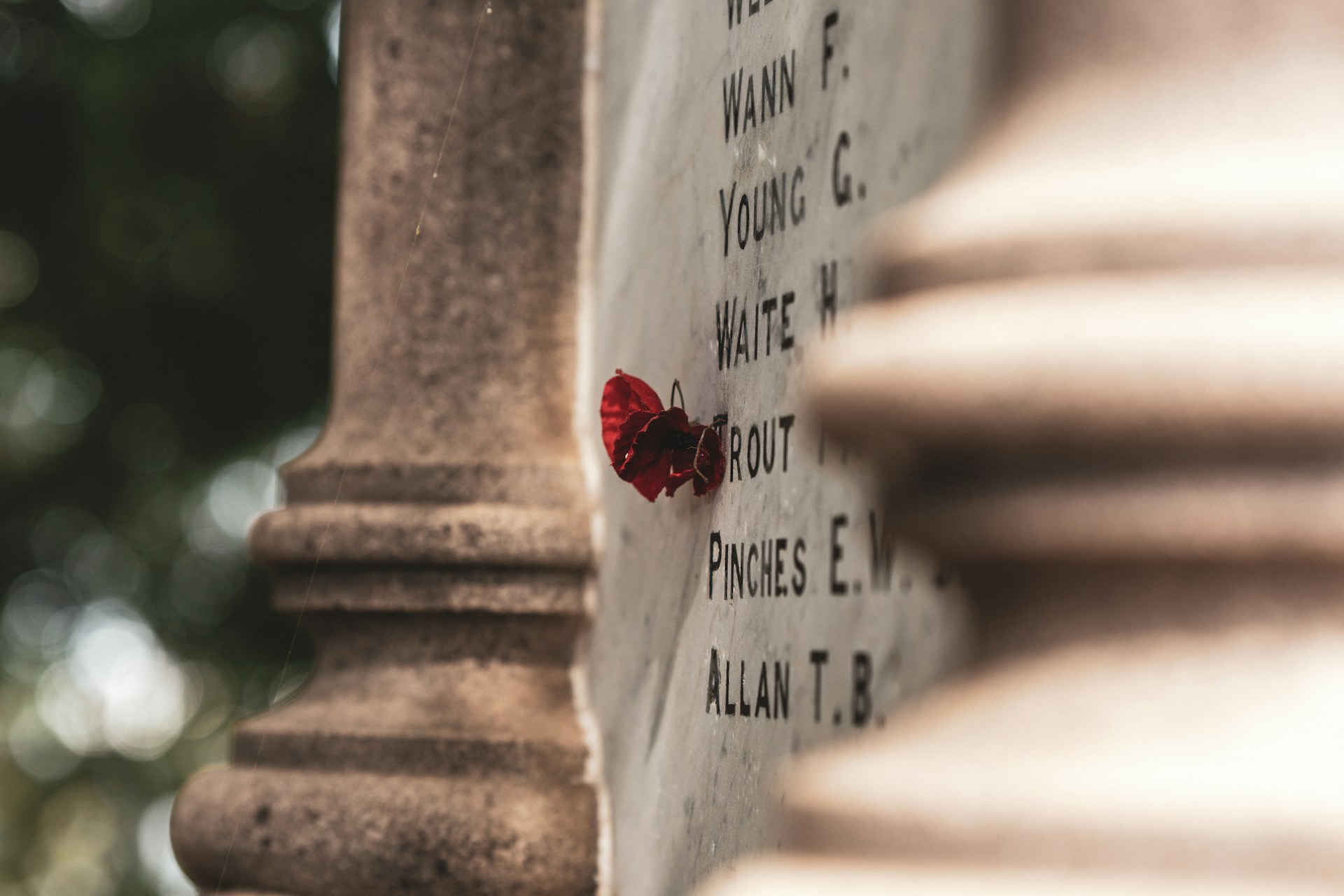
In Memoriam
My sister Meryem was born when I was five years old. At that time, I started forming explicit childhood memories. Meryem was diagnosed with a congenital heart defect. In simple terms, she had a hole in her heart. She used to cry excessively and constantly. Her cries were not like those of infants. They were terrifying shrieks like a blitzkrieg due to their higher intensity. These cries’ sounds filled the entire house. They would follow you in every room and cancel all the other sounds. Hers were the cries of someone who was born to experience excruciating pain.
On a typical day, my mother would be in the kitchen while I upstairs on the roof playing with a few toys I got before the birth of Meryem. My sister would be in her bedroom, door closed, crying her heart out. My mother usually calls for me to come down to hand me her set of keys, and ask me to wing it over Meryem’s head to distract her from whatever was tormenting her from within. The trick would work but only for a short period. Meryem would stop crying and stare at me like a doll with sunken eyes. Then, her face would become redden with agitation. Her agonizing screams would gush from her mouth, and the black holes that were supposed to be her eyes would be overflown with tears. Cry me a river? Meryem could cry you the whole Atlantic Ocean in a day.
Only three months after her birth, her health had worsened rapidly, and she had to be hospitalized. She needed a ventilator anda feeding tube to supply nutrients. Even her neck had its own hole now. God wanted to pierce that child and add more holes to the holes that already existed. My mother and I used to visit her every Saturday. I do not remember my father ever coming with us.
I liked our Saturday visits because my mother used to get up early in the morning to cook meatballs and French fries to take with us to the hospital. We would take a bus and then a taxi. Both vehicles were filthy and insufferable. That is what public transportation was like during those days. The hospital was big. It looked grey and dull, but it had a lovely garden where visitors could sit to talk, eat, or cry with their loved ones.
Although we were allowed into Meryem’s room, we never dared to enter. We simply stood outside looking at my sister through a large glass window like two curious puppies. She was always lying there with a tube inside her neck while different machines with their screens and monotonous sounds besieged her. Meryem appeared like a disjointed cyborg.
In the garden, my mother would be too sad to touch the food, so I would have it all to myself. This evoked in me an everlasting love for Saturdays. The delicious food, the sunny weather, and the smell of the freshly-cut grass in the garden always managed to wipe off the image of the sickly sister from my mind. my sickly sister wasn’t going to remain sick for long. The doctors and the machines were going to save her life for sure. The hole was going to be filled, the cries were going to cease, and Meryem was going to grow up to enjoy everything that life had to offer, meatballs and French fries included.
Three days later, she was dead. She was only nine months old.
Distance – A Short Story
The white cloth draped over my shoulders is the only thing that reminds me, in such moments of chaos, of the reason why I came here in the first place. Everything is blurry, turning my day-to-day life into an indistinct image. It’s been three months since I climbed the stairs to the plane with a beating heart and many dreams. I wanted to be a savior, a hero, and a perfect doctor. I longed to be someone who spends her time and energy making others feel less pain and despair. What a beautiful, selfless thing to do. Being a doctor is hard, but, little did I know, being a doctor when the war is at its peak is much harder. I embarked on this journey with great enthusiasm, only to have it crushed into a terrible chilling terror once the first dismembered body was laid before me. I would be lying if I said that I have gotten used to the cries of pained children and dying elders. The women who give birth in such tragic conditions do not get the chance to celebrate the birth of their newborns as they have to run back home to make sure none of their other children were killed.
I came here as a cardiologist and ended up doing everything, from extremely complicated surgeries to checking up on kids who cannot stop coughing from the smoke they have ceaselessly inhaled. Because they are desperate and out of options, the people here would let a random passerby sew their limbs back on without wondering whether they are medically qualified or not.
This feeling of despair; I know it too well. Waiting for the magical hands of a doctor to heal your loved ones, anticipating their return to your daily life, as healthy and warm as before, and hoping that everything is going to be okay. My grandpa was a man of authority with a strict presence both at home and work. He was a renowned politician, and his name alone was enough to bring the bravest men to their knees. Someone with this much power was deemed invincible, but fate had its own plans.
He fell ill unexpectedly. While we had enough money to get him into the best clinics in the country, that money could not buy us an early diagnosis. By the time doctors found the lung tumor that was eating him inside out, it was already too late.
When he passed away, a huge part of me crumbled forever. He was the father figure I never had and the anchor of a whole family that relied on him heavily. Seeing his feeble body laid on the white sheets of a hospital bed broke me in unexplainable ways. I promised myself that after I graduate from medical school I would be a doctor that works harder than everyone else, a doctor who makes sure her patients never die. And it’s impossible, I know, for death is an unexpected visitor, and it comes when you least expect it regardless of how good and dedicated you are. Yet, I wanted to try. And I am trying now. It’s not as fulfilling as I thought it would be.
It has been a month since the global spread of the new virus Covid-19, making it an emerging pandemic. Airports have closed their gates, and nearly every country in the world has retreated to its cocoon to protect itself from the deadly disease that collects human lives like the grim reaper. My husband has been updating me on the situation back home. Masks on faces, curfews as early as 6 pm, supermarkets closing their doors, and toilet paper wars in store aisles. It has been crazy, hectic, and apocalyptic. And while this is an understandable reaction to an unknown threat that has killed too many people in such a short span, I can’t help but find it quite ridiculous.
Here, squashed between the palms of a long, exhausting, and meaningless war, the last thing people are worried about is Covid-19. Dying from a respiratory illness sounds less frightening than being bombed to shreds or having your arm or leg – and in certain cases, both – amputated. There is no quarantine, no social distancing, and no online school. School itself is a privilege not accessible to many. In moments like these, I realize how different things are from one piece of land to another. While a microscopic particle is wreaking havoc everywhere, the people that got used to the atrocities of war chuckle bitterly at the name of it. What is Covid in the face of bullets and armored tanks?
Before coming here, I left my one-year-old son in the arms of my distressed husband. He did not want to stop me from the one thing I had been dying to do, but he had plenty of worries. I told him it would only be a few months before he sees me again. But now, I’m not sure if that’s true. Things don’t look bright on either side and traveling right now is impossible. I call him whenever there is a signal since both fighting parties apparently take down phone towers on a whim. He has a new thing to tell me every day. How my son grew his first premolar tooth, how he walked his first steps, how he threw a fit when his toy train suddenly stopped working. How he would gaze dreamily at the playground from the window after watching children on TV playing together. Kids his age are supposed to walk around, fall on the pavement, scrape their small knees, and have their mothers kiss their cuts better. They are supposed to meet their peers, talk to them – or at least try to, depending on how able they are to speak – and play in the sand with them.
What the quarantine has taken away from our children is irreplaceable. It’s months, if not years, of growth, memories, and new experiences that they won’t get to try. And while I am miles away from the person that needs me the most right now, I try my best to see him in the people that come by every day seeking my healing powers. They look at me, with expectant eyes, eyes that I can’t let down. They explain what hurts them, or their loved ones, and ask me if there’s hope, if they can get back to normal. I pat their heads and say that I’m going to do my best. And I do, but my best is not always enough.
No matter how many people die in front of me, or in my shaky hands, it will forever be excruciating and life-draining. It’s a human life, a person with memories, things they love and hate, and people that can’t bear living without them. You were entrusted with their life, but it slipped through your knuckles like flowing water.
My workday usually starts with someone knocking on my door, then several people rush inside the room before I get to open my eyes. An injured person is laid on the table by the time I leave the bed, and I have to be quick, efficient, and, more than anything, dedicated to saving them. It’s hectic, chaotic, and exhausting. A large number of people have contracted the virus ever since it reached this land. All of a sudden, it wasn’t something we can joke about or call insignificant when compared to the destruction the war has caused. Misfortunes never come individually; Covid-19, the bombings, and the soldiers with their huge guns shooting randomly at civilians. I had to find a way to stay safe and keep these people safe at the same time.
While I was busy doing my job, my son caught covid and was hospitalized. When my husband called to let me know, I felt like everything I had been doing was a mistake. I couldn’t even be by my baby’s side to make the two of us feel better. What if I lost him and didn’t even get to kiss him for the last time and hold him to my chest with all the love I have in me? What is my purpose in life if it isn’t to be a good mother to a child that I brought to life, so selfishly, and then abandoned?
Covid isn’t only an illness that weakens the body; it is also a barrier that separates loved ones and forces them to say their goodbyes through the shaky reception of a phone line or, if they were lucky enough, a video call. It has changed everything about social interactions and banned hugs and handshakes. All we could resort to is waving, with six feet of distance between our bodies and endless sadness in our hearts.
And all I could think of was; “when is this nightmare going to end?” “When are we going to embrace each other again with no fear or hesitation?”
I’m Only a Wayfarer
I’m only a wayfarer,
Travelling across lands,
Crossing deserts with all their hazards.
Barefoot,
Half-naked,
And half-baked by the heat,
From above and from bellow,
My feet are burning,
And my throat is choking with thirst,
Awaiting deliverance from above.
Is there an answer?
“Keep walking, keep walking,”
Reverberates in my ears,
“And you shall find a fountain
Flowing
Endlessly
With water.”
But all I find is heat,
My body failed me, and I have started to stagger,
And out of a sudden,
My ears heard a splash of water,
And I said to my mind: “am I in a dream?”
And I knew for certain that I was saved.
Ocean Eyes
Silence is heard from a distance,
Its dullness is smiling with a grim grimace.
The place echoes sounds of furious pain,
But its people are snoring in roars.
Like a range of rocks in a cave lane,
Beauty is always there,
But it never crosses the door.
She was a rose wanted,
And among many, she was selected.
With a scarf over her head,
The beauty, an overload of charm.
Her ocean eyes tell stories and fairy tales,
I looked once and felt drowsy,
I drank once and died thirsty.
Her fickle eyes twinkle,
We need not words to speak,
We need not ears to listen.
When having fun, time flies,
And when I am gone, she cries.
My shelter from the rain,
Yes, she is my bulwark from pain.